
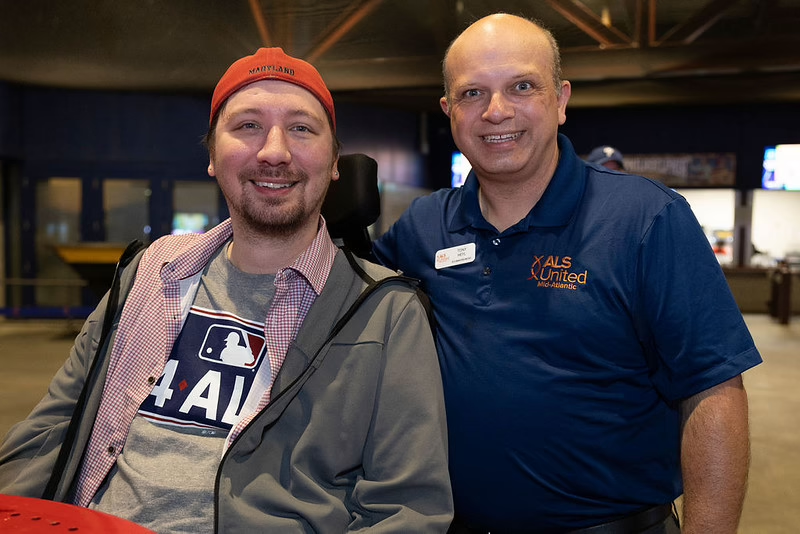
Tony Heyl, Executive Director of ALS United Mid-Atlantic, Joins Slutsky Elder Law as a Guest Contributor.
We all want to do things for ourselves. We want to be self-sufficient. Sometimes, the best way to be self-sufficient is to ask for help.
At ALS United Mid-Atlantic, we provide direct support for over 1,200 people living with ALS each year in Pennsylvania, New Jersey, and Delaware. Generally, people do not expect or plan for a diagnosis of ALS. Only about 10% of cases are considered to be familial, meaning that there is a clear genetic link passed down from a family member. At least 90% of cases are considered sporadic, with no known familial link.
The surprising diagnosis of ALS means that people often do not realize the many challenges and needs that they or their family will face with this disease. It is natural to think that you will be able to handle at least the early progression of the disease. After all, you have faced the world yourself for your whole adult life, so it makes sense to make changes that will help you live comfortably even as ALS symptoms progress.
However, it is very difficult to predict how anyone’s battle with ALS will advance. For some, symptoms accelerate rapidly. For others, it may be slower. Everyone has different issues with accessibility, insurance, travel, communication, and more. There is no one set path for ALS and so there is not one easy way to handle this disease on your own.
This is why the best way to be self-sufficient is to be open to asking for help and guidance early and often. ALS United Mid-Atlantic has expert social workers and nurses on staff who answer questions for people with ALS and their caregivers every day. They also coordinate with teams at multidisciplinary treatment centers to address a whole host of needs so that you can better handle the ongoing challenges of this disease.
Asking for help isn’t just good for your health and safety. It allows you to help your spouse and other family members and friends who have stepped up as caregivers. When they can better help you, then you can better take care of yourself.
This assistance is also important as you make your way through the constantly changing world of insurance and healthcare. Not only do we have social workers on hand who can provide guidance on these topics, but we can help you with common Medicare issues or with how to talk with your financial planners.
This help is important for those living with ALS, but it is also important for anyone facing challenges due to health or aging. By seeking help early, you can put yourself in a better position to take care of your family and your home. We all need assistance sometimes. It makes us make better choices.
Asking others for help is important not just when you are dealing with your own physical or health challenges. It is also vital when you are a caregiver yourself. We will all one day be in a position where we need to care for a loved one. Nobody has to face that alone. When you reach out to ALS United Mid-Atlantic or another organization that deals with these topics, you become a more reliable caregiver.
ALS United Mid-Atlantic assists people with ALS and their families with programs such as assistive technology, in-home care, durable medical equipment, resource groups, caregiver groups, educational programs, access to social workers and nurses, and more, as well as investments in groundbreaking research happening right here in our area. People with ALS also can retain more independence with guidance from our Home Accessibility and Assistive Technology Specialist Alisa Brownlee, who had over 30 years of experience in addressing needs from communication to ramping.
Help for physical needs may be most obvious, but ALS United Mid-Atlantic also assists people from a mental health perspective, with experts offering discretion and compassion as well as groups focused on mindfulness. Focusing on mental health is important to preserving more personal independence.
To learn more, visit www.alsmidatlantic.org or contact me at Tony@alsmidatlantic.org and follow us on social media @alsmidatlantic.